
Table of Contents
- Why Safe International Shipping for Collectibles Matters
- Best Packaging Materials for Fragile Collectibles
- International Shipping Insurance for High-Value Items
- How to Document Authenticity for Customs
- Selecting the Right Courier for Collectibles
- Step-by-Step Shipping Checklist
- Common Mistakes to Avoid When Shipping Collectibles
- Frequently Asked Questions
Last Updated: September 30, 2026
Why Safe International Shipping for Collectibles Matters
Shipping hand-signed K-pop memorabilia across borders demands precision. A single mistake during transit can destroy irreplaceable cultural treasures worth thousands of pounds. At Baderstreet, we understand this pressure intimately, every autograph we send is a piece of history that cannot be replaced.

Safe international shipping for collectibles isn't just about getting a package from A to B. It's about protecting investment-grade items through customs, across continents, and into the hands of collectors who've waited months for their piece. The difference between a collector receiving their BTS or BLACKPINK hand-signed autograph in pristine condition versus damaged goods comes down to preparation, materials, and the right carrier.
Most collectors underestimate what happens during international transit. Parcels get crushed in sorting facilities. Temperature swings damage delicate signatures. Customs inspections can expose items to rough handling. Insurance gaps leave collectors unprotected if something goes wrong.
This guide walks through every step of safe international shipping for collectibles, from packaging techniques that actually work to insurance strategies that protect high-value items. We'll cover documentation that keeps customs moving smoothly and show you exactly what separates amateur shipping from professional-grade protection.
Best Packaging Materials for Fragile Collectibles
Choosing the Right Box and Cushioning
Your outer box is the first line of defence. Standard cardboard fails under the pressure of international sorting machinery. Use double-wall corrugated boxes rated for fragile goods, these withstand compression forces that would crush single-wall alternatives.
The box itself matters less than what's inside. Air gaps between your collectible and the box walls are where damage happens. Cushioning materials absorb shock, but only if they're the right type.
Best cushioning materials for hand-signed collectibles:
- Acid-free tissue paper (wraps directly around signatures without chemical damage)
- Bubble wrap with small bubbles (larger bubbles pop too easily under pressure)
- Foam sheets at least 5cm thick (rigid foam protects better than loose fill)
- Packing peanuts only as a secondary layer (they shift during transit)
- Never use newspaper or regular tissue (acid degrades signatures over decades)
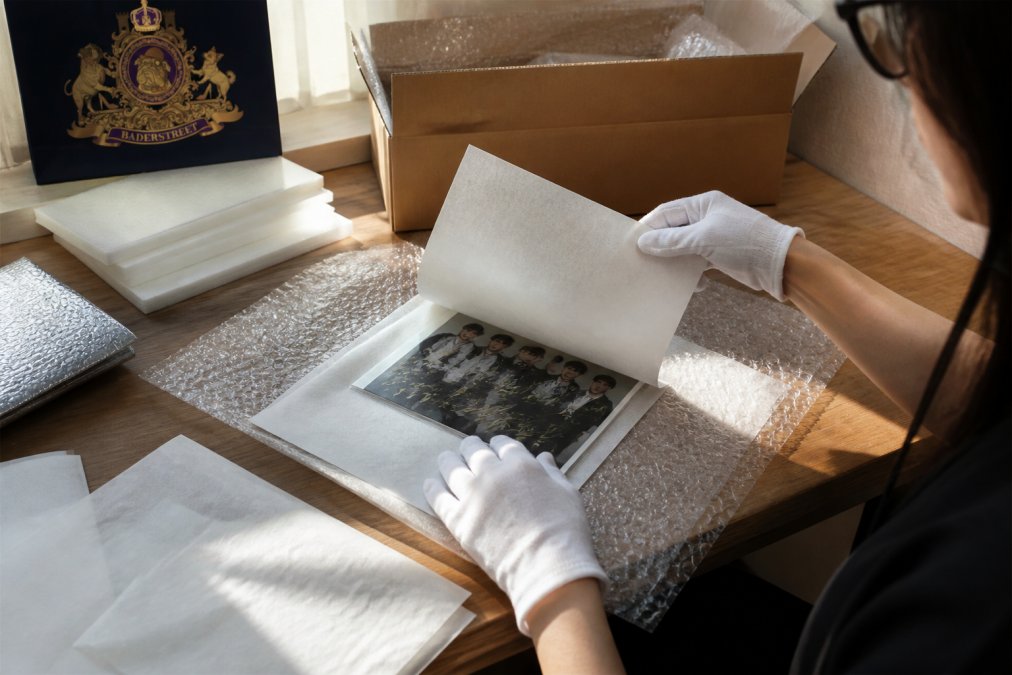
The weight of your box matters too. International carriers charge by dimensional weight, but overbuilding with excessive materials costs money without adding protection.
Layering Techniques for Maximum Protection
Think of your package like an onion. Each layer serves a specific purpose.
Layer 1: Direct Contact Wrap your collectible in acid-free tissue first. This prevents the signature from rubbing against anything else. For framed autographs, wrap the entire frame, not just the signed portion.
Layer 2: Shock Absorption Add 2-3cm of bubble wrap around the tissue-wrapped item. This is where most shock gets absorbed during handling and drops.
Layer 3: Rigid Protection Surround the bubble-wrapped collectible with foam sheets. Cut sheets to size so they fit snugly, loose foam shifts during transit and defeats the purpose.
Layer 4: Fill and Stability Pack packing peanuts or crumpled paper around the foam to fill empty space. This prevents your inner package from moving inside the outer box.
Layer 5: Outer Protection Double-box valuable items. Place your completed inner package inside a larger outer box with at least 5cm of cushioning on all sides.
The key is eliminating movement. If your collectible can shift inside the box, it will shift during transit. Test this by gently shaking your sealed package, you shouldn't hear or feel anything moving inside.
International Shipping Insurance for High-Value Items
Understanding Coverage Limits and Declared Value
Standard carrier insurance covers only a fraction of what your collectible is actually worth. A hand-signed BLACKPINK autograph worth £500 might have only £50 in automatic coverage through basic shipping.
Declared value is your responsibility. You must state what the item is worth when you ship it. This becomes your insurance ceiling. Undervalue your item to save on insurance costs, and you'll receive only that undervalued amount if something goes wrong.
Most carriers offer optional insurance that covers the declared value minus a deductible. For collectibles, this additional coverage is essential.
Insurance options for international collectibles:
- Carrier insurance (usually covers up to declared value with deductible)
Baderstreet ships all hand-signed memorabilia with full express insurance included. Every BTS Suga autograph or Song Hye Kyo hand-signed collectible travels fully protected from warehouse to doorstep.

Document the condition before shipping. Take photographs of your item from multiple angles. If it arrives damaged, you'll need photographic proof that the damage occurred in transit, not before shipping.
How to Document Authenticity for Customs
Using Your Certificate of Authenticity (COA) Effectively
Customs officials have no way to verify that a hand-signed autograph is genuine. They see a piece of paper with a signature and need proof it's not a forgery being smuggled as something valuable.
Encounter Song Hye Kyo Autograph with →

Your Certificate of Authenticity is that proof. A proper COA includes the authenticator's credentials, the date of authentication, the item description, and a unique serial number. Customs accepts this as documentation of value and authenticity.
Pack your COA separately from the autograph itself. Place it in a clear plastic sleeve and tape it to the inside of the outer box. This keeps it visible to customs inspectors without exposing it to the same handling as the collectible.
What your COA should contain:
- Authenticator name and credentials
- Item description (artist, date signed, condition)
- Unique serial number for tracking
- Date of authentication
- Photograph of the signed item
- Statement of authenticity and value
When Baderstreet ships a hand-signed collectible like our BTS RM Shikishi Art Board autograph, the COA travels with it. This isn't just protection, it's proof of what you've purchased. Customs clears items faster when documentation is complete.
Photograph your COA before shipping. Store the image digitally in case the original gets lost in transit. If your collectible arrives without its COA, you'll have proof of what was included.
Selecting the Right Courier for Collectibles
International carriers handle millions of parcels daily. Most treat all packages the same, which is fine for standard goods but risky for collectibles.
Express couriers offer better protection than standard services. They handle fewer parcels, use more careful sorting, and deliver faster (reducing exposure time).
Key differences between carriers:
| Carrier Type | Speed | Tracking | Insurance | Best For |
|---|---|---|---|---|
| Express (UPS/DHL) | 3-7 days | Real-time | Full declared value | High-value collectibles |
| Premium postal | 7-14 days | Basic | Limited | Medium-value items |
| Standard postal | 14-30 days | Minimal | Very limited | Lower-value items |
Choose based on your item's value.
Step-by-Step Shipping Checklist
Getting safe international shipping for collectibles right means following a system. Use this checklist every time.
Before You Pack:
- Photograph your item from all angles
- Write down the condition (any flaws, creases, marks)
- Confirm the recipient's address is correct
- Check customs restrictions for the destination country
- Prepare your Certificate of Authenticity
Packaging:
- Wrap item in acid-free tissue
- Add 2-3cm bubble wrap layer
- Surround with foam sheets (5cm minimum)
- Fill gaps with packing peanuts
- Place in outer box with 5cm cushioning on all sides
- Seal all seams with strong tape
- Label as "FRAGILE" and "DO NOT BEND"
Documentation:
- Attach COA to inside of outer box
- Complete customs form accurately
- Declare full value (never undervalue)
- List item as "hand-signed autograph" (be specific)
- [ ]
Shipping:
- Choose express courier (UPS/DHL)
- Purchase full insurance coverage
- Get tracking number and receipt
- Photograph the sealed, labelled package
- Email tracking details to recipient
- Keep all receipts and documentation
After Shipping:
- Monitor tracking daily
- Note any delays or issues
- Contact carrier if package stalls
- Confirm delivery with recipient
- [ ]
Common Mistakes to Avoid When Shipping Collectibles
Most shipping failures come from preventable errors, not freak accidents.
Undervaluing items for insurance costs collectors thousands annually.
Choosing slow shipping for high-value items extends exposure time.
Frequently Asked Questions
What is the safest way to ship high-value collectibles internationally?
Use a combination of proper packaging, declared value insurance, and a reputable express courier. Wrap items individually in acid-free tissue, place them in rigid boxes with cushioning materials, and select a service with full tracking and signature confirmation. Always declare the true value on customs paperwork and include your Certificate of Authenticity (COA) documentation to support the declared amount and prevent customs delays.
Do I need insurance for shipping rare memorabilia internationally?
Yes, insurance is essential for rare, irreplaceable items like hand-signed autographs. Most express couriers offer declared value insurance up to a certain limit, but verify the coverage amount matches your item's actual value. Your COA provides proof of authenticity and value, which couriers require to process insurance claims.
How does a Certificate of Authenticity (COA) affect international shipping?
A physical COA is critical for customs clearance and insurance purposes. Include the original COA in your shipment documentation, and photograph it before dispatch. Customs officials use it to verify the item's legitimacy and declared value, reducing inspection delays. When filing insurance claims, the COA serves as proof of authenticity and supports your claim for the full replacement value of rare items like BTS or BLACKPINK hand-signed memorabilia.
What documentation do I need to prepare for customs when shipping collectibles?
Prepare a detailed customs declaration listing the item's description, material, condition, and declared value. Attach or reference your Certificate of Authenticity (COA) to support the valuation. Provide your exporter and recipient details, and ensure all paperwork matches the courier's tracking information to prevent delays at customs.
0 Kommentare